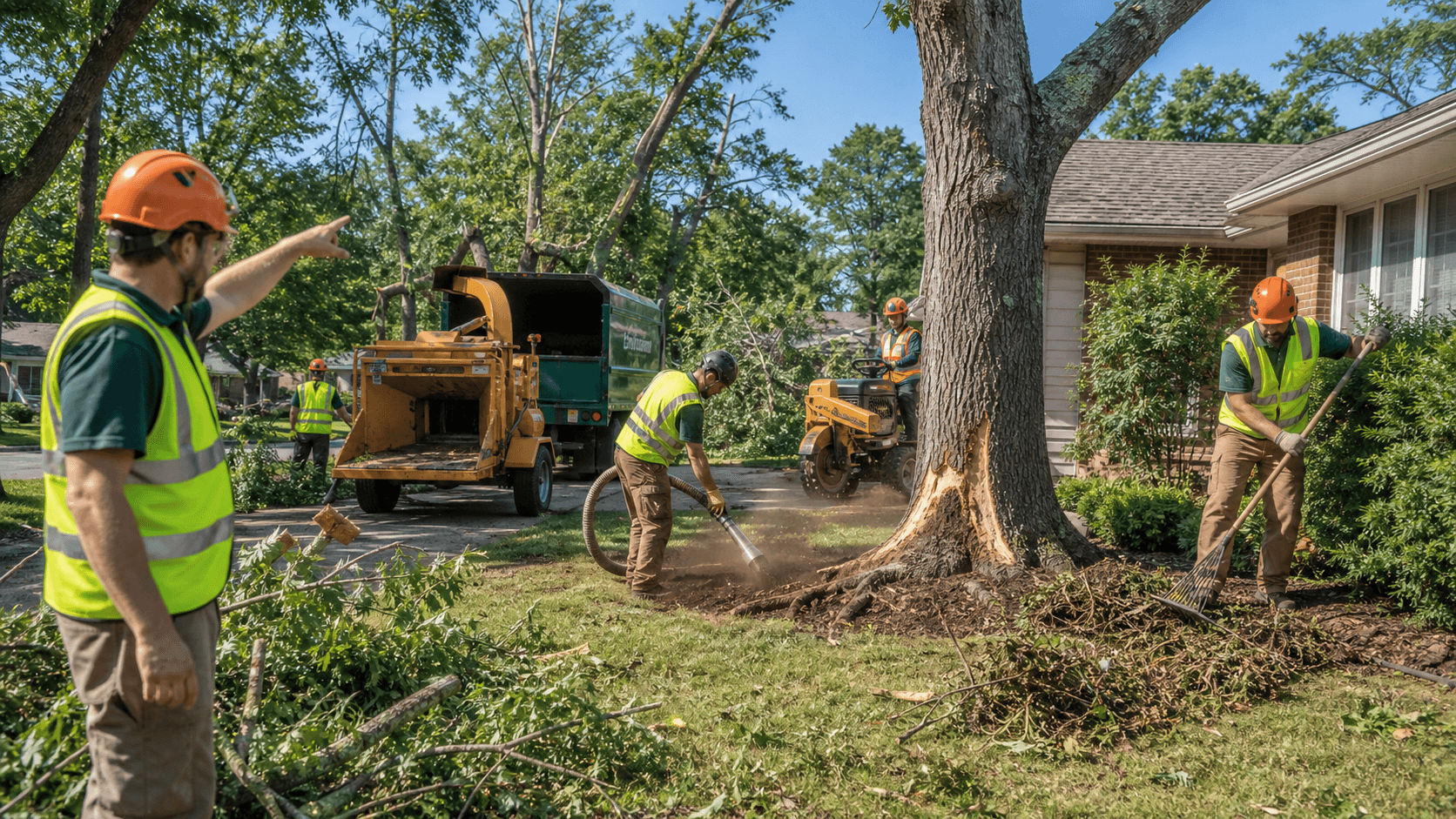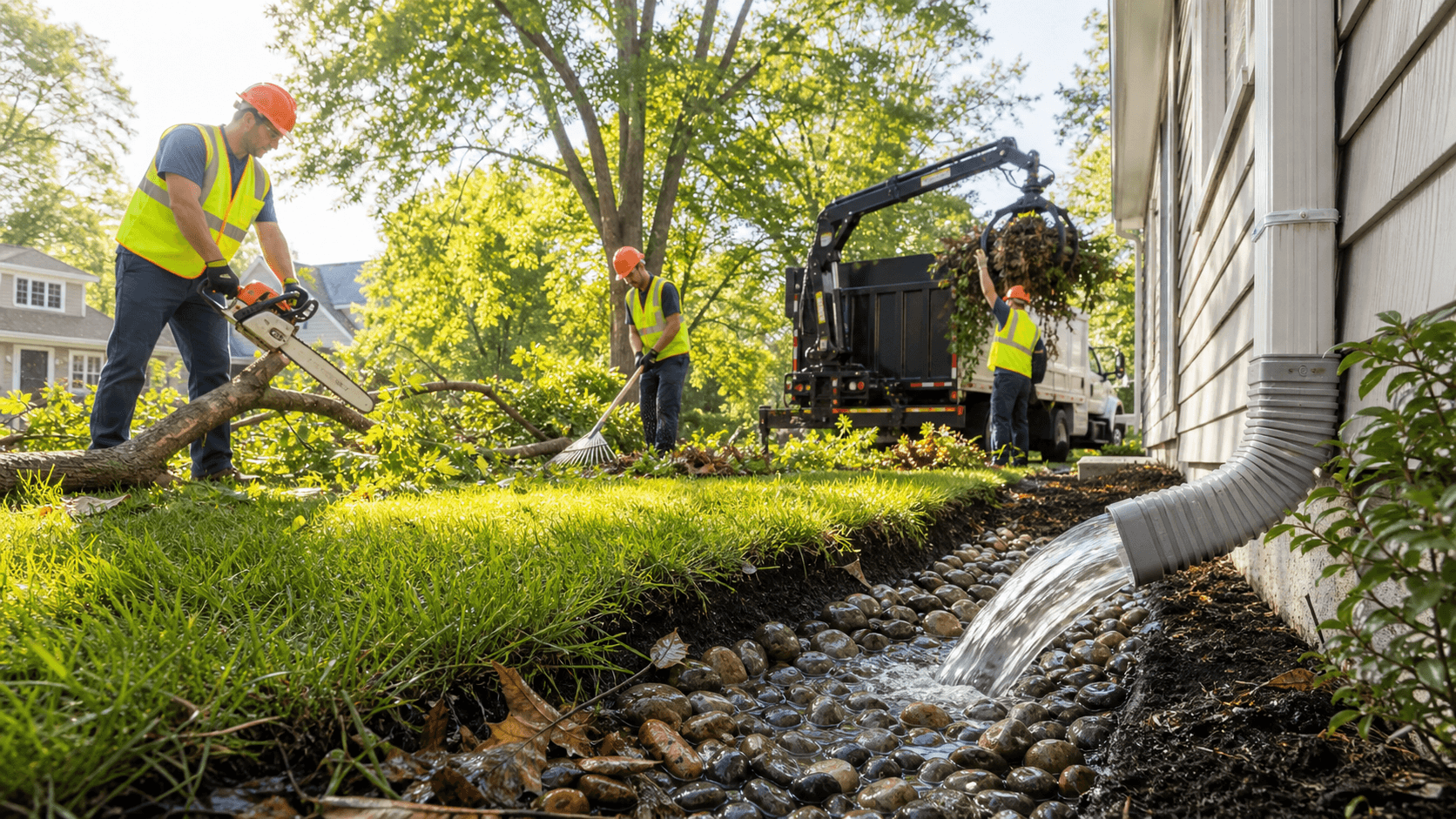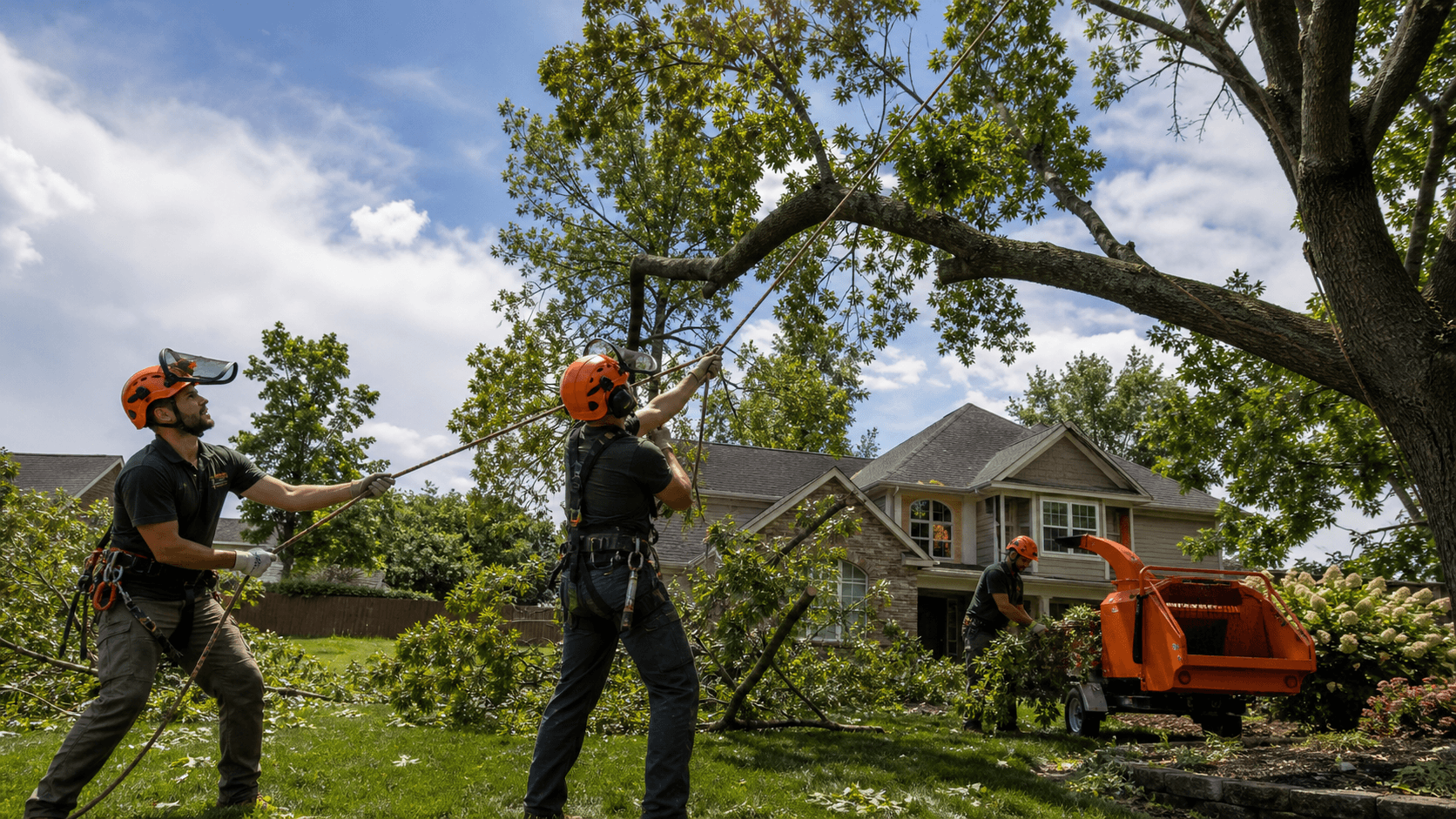
Late summer through early fall in Joplin can be noisy with wind and wet with storms. It's not just a few leaves getting tossed around either. We see broken limbs, scattered debris, and sometimes whole trees knocked off balance. When everything hits at once, yards go from neat to messy in a hurry.
How we respond to that mess matters. Rushing cleanup or cutting carelessly can weaken trees that are already stressed. That's why storm damage cleanup in Joplin needs to go beyond fast removal. It's about protecting long-term tree health while dealing with the immediate mess.
How Storms Impact Tree Structure and Growth
Heavy rain and wind have a way of exposing every flaw a tree might have. Big branches can break under pressure. Smaller limbs twist and snap where there's already weakness. Sometimes we find bark peeled back or deep cracks where joints gave out. Rainwater softens the ground too, which can leave roots exposed or tilt trees just enough to change how they grow.
- High winds can stretch or twist trees, pulling limbs loose from the trunk
- Soaked soil allows trees to shift, exposing roots or bending smaller trees
- Torn bark and open wounds make trees vulnerable to bugs and decay
- Damage during late season growth can limit how trees prepare for winter
These effects don't always show up right away. What looks like a strong tree might be struggling beneath the surface. Catching this early helps support better recovery through the colder months.
Steps to Remove Debris Without Harming Trees Further
When the yard is full of broken limbs, it's tempting to grab the biggest branch first and start dragging. But moving too fast can hurt trees even more. How we clean up is part of how we protect what's still healthy.
- Cut broken limbs cleanly at the break or just outside the collar, never twist or snap them off
- Avoid dragging limbs over tree roots, especially if the ground is soft or recently soaked
- Leave debris that's lightly touching a fragile trunk in place until a clean removal is possible
- Don't force limbs out of tangled canopies, especially if they're caught high up
Each choice during cleanup either helps recovery or adds stress. Being thoughtful with the small steps helps trees stay strong where it counts.
When to Trim, When to Wait
Storm cleanups usually involve some quick trimming, but not every branch needs to come off immediately. Timing makes a difference in how trees respond. Fall trimming can help, but when a tree is already stressed, it might do better if we give it a little space first.
- Cut hanging or cracked limbs that pose a safety risk right away
- Wait to trim small branches unless they're dead, loose, or damaged
- Look for signs the tree is stable before shaping or thinning it
Some trees bounce back fast and can handle normal trimming soon after a storm. Others show signs of stress and need time. If a tree has flexible branches, steady growth, and no major bark damage, it might be strong enough to finish recovery before we reshape it.
Watch for Signs of Ongoing Stress Weeks After the Storm
The rush to clean up doesn't always end once the branches are gone. Some trees look fine after a storm but slowly show signs of a struggle. It helps to check every few weeks once things settle down.
- Watch for curled leaves, brown edges, or early color change that seems off
- Look for bark that's peeling or staying wet too long after a rain
- Check for white patches or mushrooms around the trunk base
- Keep an eye on low spots around the roots that weren't there before
These signs often show up near the base, around exposed roots, or in the lower canopy. If something seems off, it usually is. Waiting too long to act can make recovery even harder as colder weather moves in.
Why Regular Monitoring After Cleanup Makes a Difference
Storms often cause more than just surface damage. Cracks, rot spots, or shifting roots can grow worse with time, not better. Once the leaves start to drop and drainage slows down, trees hold on to whatever strength they've got left from the season. That's when small injuries can quietly turn into big problems.
- Tiny cracks can open wider under the weight of soaked leaves or light snow
- Wind tunnels through missing limbs and changes how a tree balances
- Soil stays soggy longer in fall, and that affects how roots take hold
Watching trees every few weeks helps us understand if they're holding on or going backward. Fall in Joplin doesn't give us a reset button. It just gives us a chance to reduce stress before winter sets in hard. Cleanup is only part of the care trees need. What happens next matters just as much.
Staying Ahead of Tree Trouble All Fall Long
Storm damage cleanup works best when it's paired with care. Trunk wounds need time, roots need space, and canopies need a chance to breathe without carrying extra weight. A rushed cleanup might feel like progress, but trees don't heal on speed, they recover on patience and protection.
Fall in Joplin doesn't wait for perfect timing. Strong winds, cold rain, and soft soil test everything trees just went through. Working gently, checking often, and trimming when it makes sense helps them bounce back stronger and face the next round upright. Trees that are supported after storms don't just survive the season, they show up ready for the next one. And that makes all the difference when the cold finally takes hold.
Messy yards after heavy weather can hide deeper problems, especially when limbs are cracked, roots are exposed, or soil has shifted. We've seen how quick fixes often make recovery harder, which is why we focus on a careful approach that supports long-term tree health. It takes more than cleaning up branches to fix storm issues, it takes time, the right tools, and knowing when trees need space or support. When your yard still feels off after a recent storm, we can help with thoughtful storm damage cleanup in Joplin. Call Swartz Tree Service today to schedule a visit.