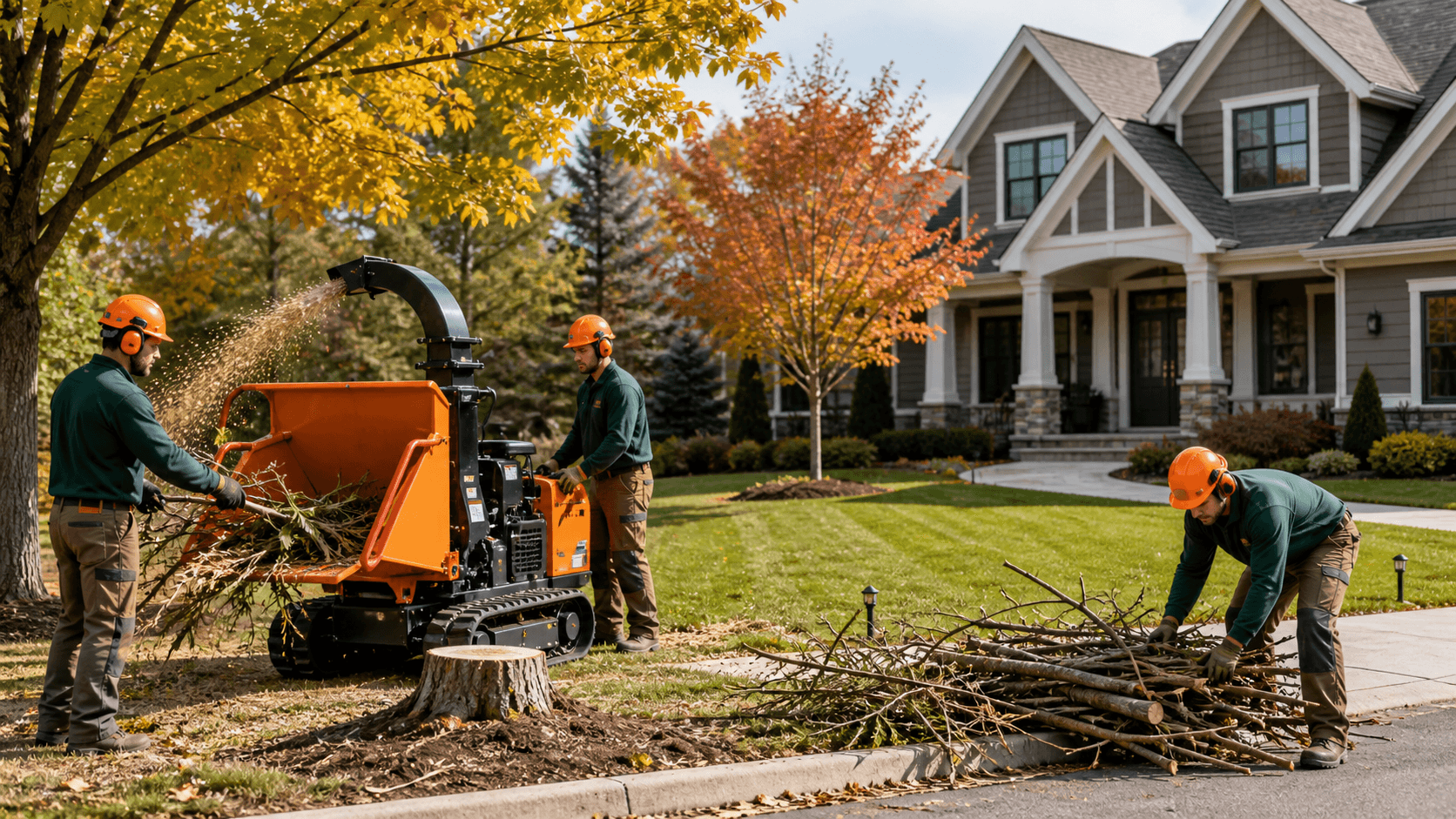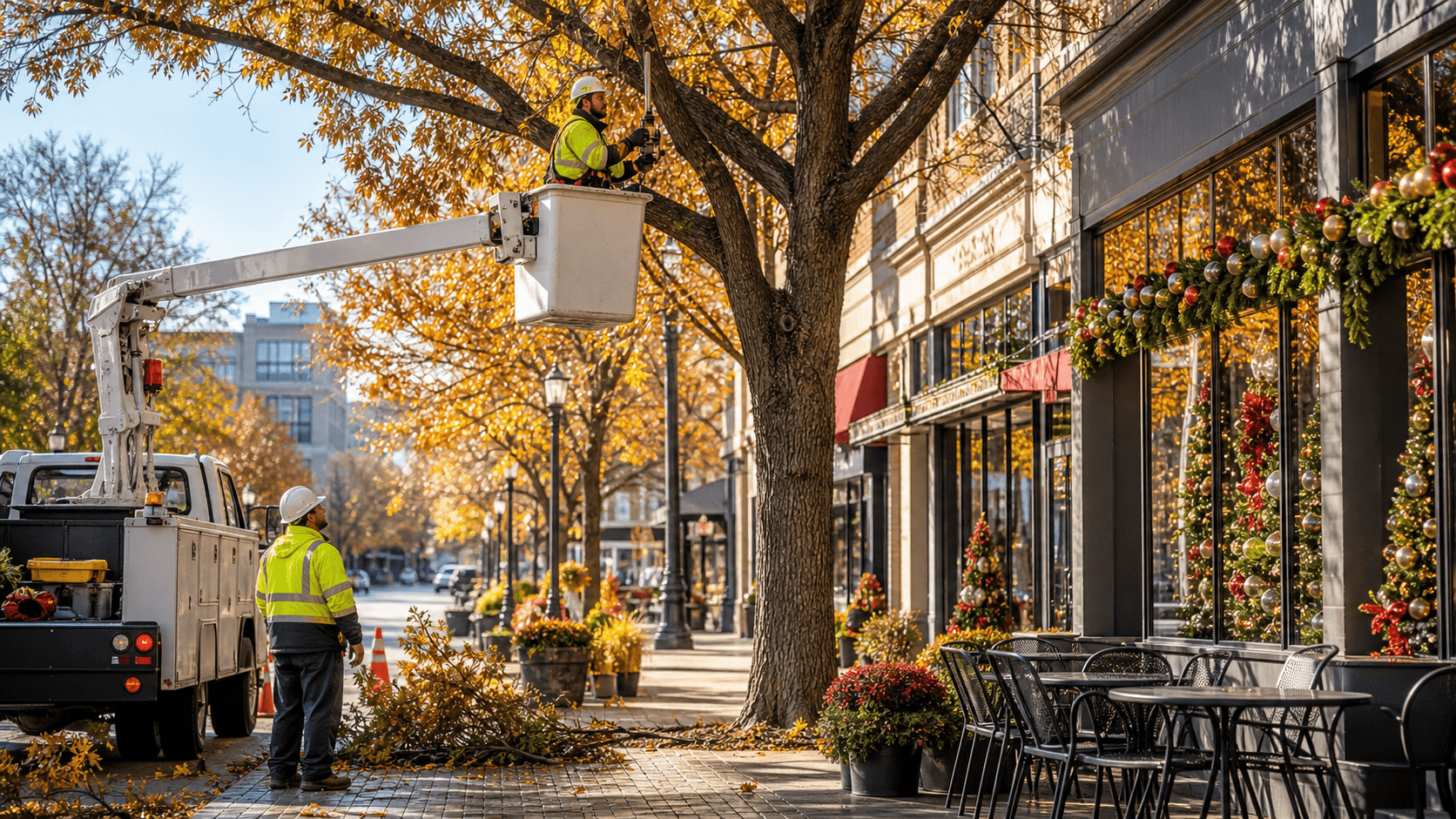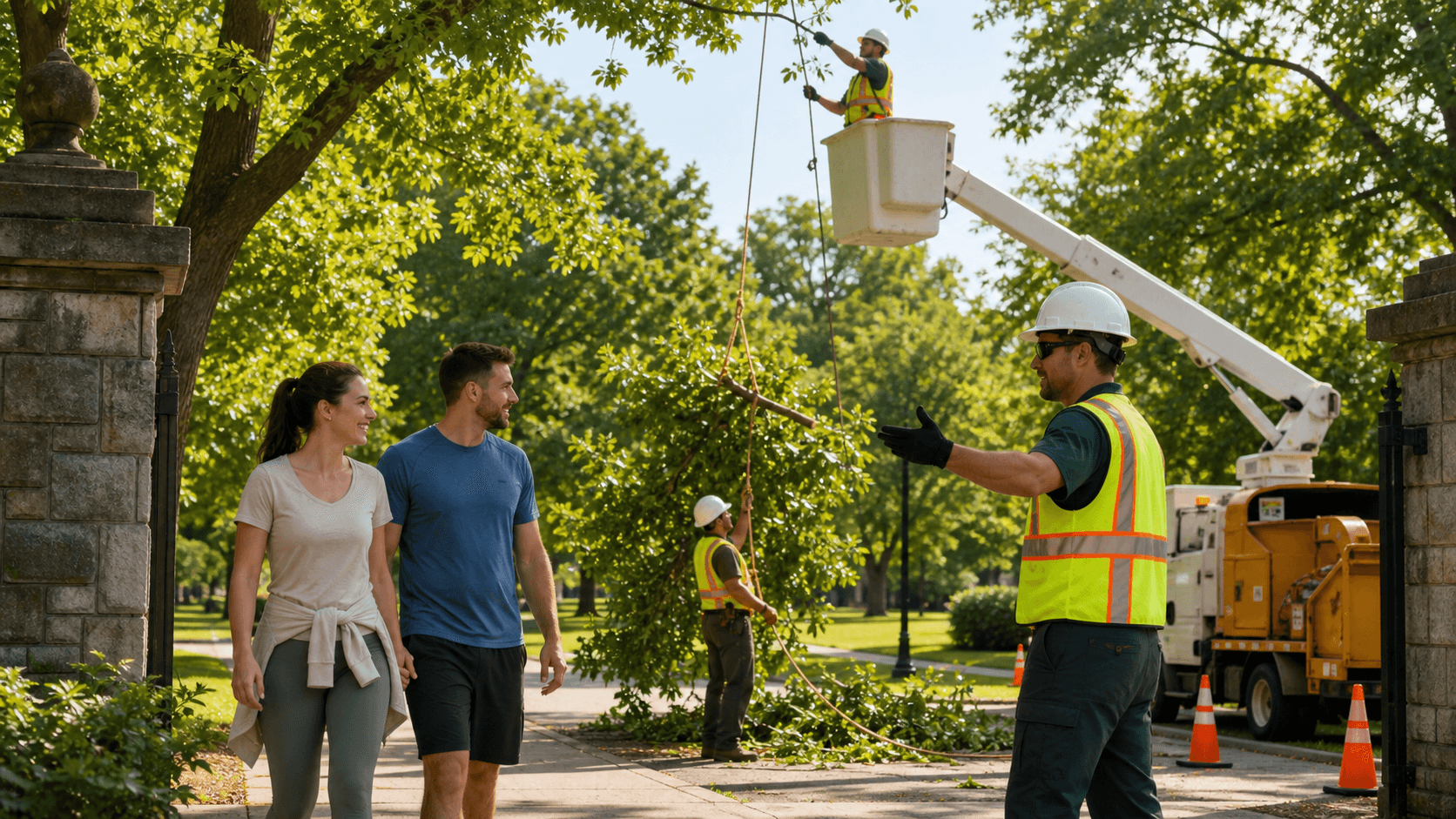
A commercial tree service inspection helps you spot problems before they affect your property, your people, or your daily operations. Trees bring shade, curb appeal, and character to a business site, but neglected trees can also create safety concerns and expensive disruptions.
We recommend treating tree inspections as part of your regular facility maintenance plan, not as an afterthought when a branch falls or a tree begins to lean. A clear look at the trees around your property can help you make informed decisions before small concerns grow into larger ones.
Protect Your Site, Customers, and Investment
Commercial properties of all kinds can benefit from regular tree evaluations. Whether you manage an office, retail center, apartment community, industrial property, restaurant, medical facility, or another managed site, trees often sit close to the places people use every day.
A tree may look healthy from a distance while hiding trouble that is not easy to see. Internal decay, weak branch attachments, root damage, and uneven canopy growth can develop gradually. By the time a problem becomes obvious, it may already require urgent attention.
During a commercial tree service inspection, we look at the concerns that may affect your property and help you understand which ones need attention first. That gives you a practical starting point instead of guessing what should be trimmed, monitored, or removed.
Tree Problems Can Interrupt Daily Operations
Overgrown limbs and declining trees can get in the way long before they fail. A low branch may block a sign, reduce lighting, scrape delivery vehicles, or hang over a walkway. Roots can also affect pavement and landscaped areas, creating concerns around high-traffic spaces.
Common trouble spots around commercial properties include:
- Parking lots, drive lanes, and loading areas
- Sidewalks, entrances, and outdoor seating spaces
- Signs, exterior lighting, and utility lines
- Rooflines, fences, and nearby structures
- Employee, tenant, customer, and delivery access routes
When trees are left unchecked, even a limited issue can lead to cleanup needs, restricted access, repairs, or interruptions to normal business activity. Dead branches, unstable trunks, and invasive roots can affect vehicles, roofs, pavement, landscaping, equipment, and other property features.
There is also a responsibility to maintain reasonably safe premises for the people who use your site. While tree care cannot remove every possible risk, keeping records of inspections and recommended work can show that you are taking a responsible approach to maintenance. We encourage you to include tree care in your wider risk management and property planning process.
What a Commercial Tree Service Inspection Can Reveal
A professional inspection looks beyond a tree's appearance. We consider the tree's overall condition, its location, and what could be affected if a branch breaks or the tree declines further. Some concerns are easy to notice, while others require a closer look at the trunk, canopy, and root area.
During an inspection, we may assess:
- Overall tree health and canopy condition
- Deadwood, cracks, cavities, and damaged limbs
- Leaning, poor branch structure, and weak attachments
- Visible root damage and the root flare near the trunk
- Conflicts with buildings, sidewalks, parking areas, and utilities
Location matters as much as condition. A mature tree in an open section of land may present a different level of concern than a similar tree beside a building entrance, playground, customer patio, parking space, or loading zone. Trees near places where people gather or vehicles move often deserve closer attention.
Not every concerning tree needs to be removed. Depending on what we find, the right next step may be trimming, selective pruning, monitoring, cabling, stump grinding after a removal, land clearing, or tree removal. The goal is to match the work to the condition of the tree and the needs of the property.
Use Inspection Results to Plan Tree Care
A thoughtful inspection can help you prioritize work based on urgency, safety impact, budget needs, and how your property operates. Instead of reacting to every tree concern at once, you can address high-priority risks first and plan lower-priority maintenance for a more practical time.
Clear recommendations also make communication easier between owners, facility managers, landlords, tenants, and maintenance teams. When everyone understands what work is recommended and why, it is simpler to request approvals, gather estimates, and coordinate access to affected areas.
Planning ahead can reduce disruptions during tree work. We can help identify work zones, equipment access needs, and areas that may need temporary restrictions. That makes it easier to protect customer traffic, employee access, parking availability, and day-to-day operations while needed work is completed.
Keeping organized records is also worthwhile. Save inspection dates, recommendations, completed services, and notes about trees that need future monitoring. These records can support long-term budgeting and help you track changes across the property over time.
Build a Practical Plan Before Risks Grow
Routine care helps protect healthy trees while reducing avoidable hazards. Your plan may include regular trimming for clearance, deadwood removal, monitoring mature trees, stump grinding after removals, and periodic reevaluations of high-use areas. Swartz Tree Service is locally owned in Joplin and serves commercial properties throughout the Four-State area with tree removal, trimming, stump grinding, land clearing, storm cleanup, and emergency tree services when appropriate.
Walk your property regularly and take note of trees near buildings, walkways, parking areas, signs, and utility lines. Dead limbs, leaning trunks, exposed roots, overgrown branches, and damaged pavement are all reasons to seek a professional assessment before the issue disrupts your business.
Protect Your Property With Expert Tree Care
Swartz Tree Service provides dependable commercial tree service tailored to the needs of business properties. Our team can help identify priorities and recommend practical care that supports a safer, more professional-looking landscape. Ready to discuss your property's needs? Contact us to schedule service.